FairFoundry Fabric
Automated settlement infrastructure for contract manufacturing. Escrow, verification, quality credentials. Open source.
Architecture
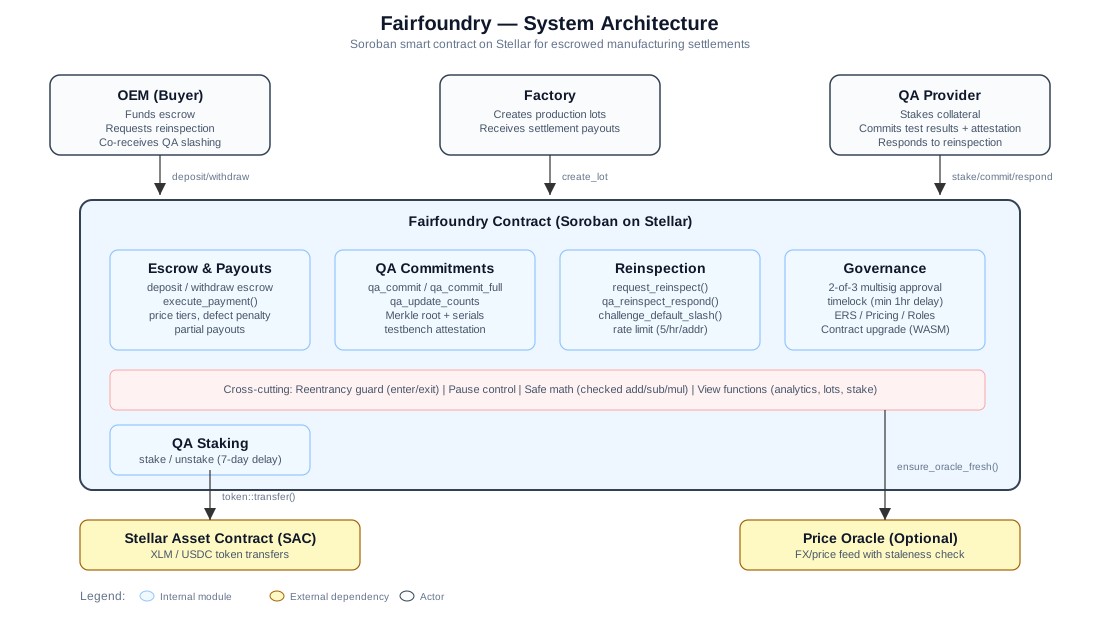
The FairFoundry Fabric consists of a settlement engine and a quality credential system, connected by an automated verification layer.
Settlement Contract
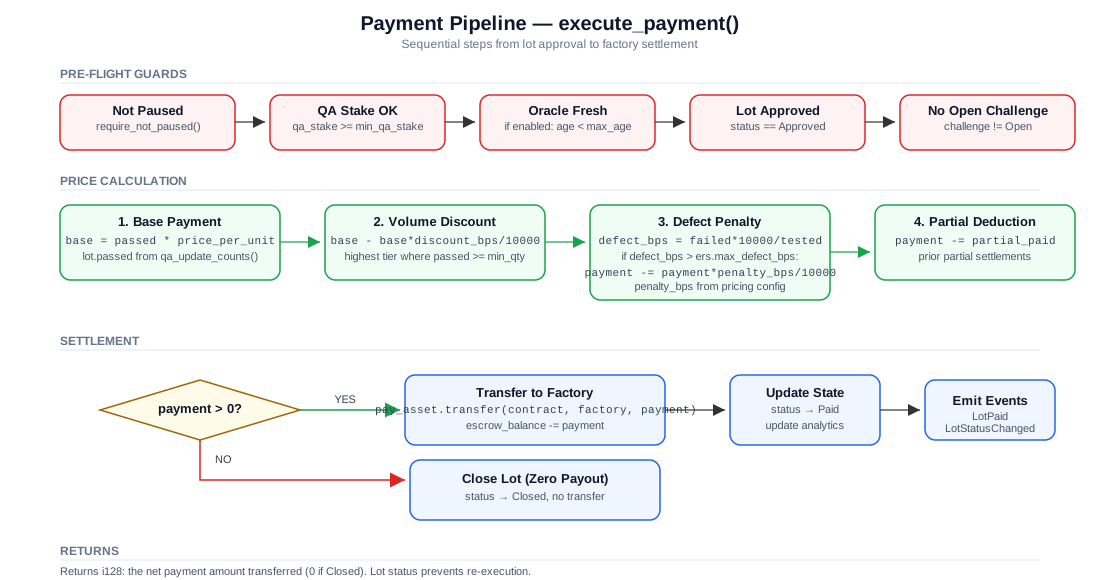
Manages escrow, service orders, automated verification, credit ledger, and automatic payment release.
Quality Credential System
Non-transferable quality certificates issued on validated completion. Each credential is permanent, auditable proof of service delivery.
Verification Layer
Automated inspection of factory artifacts 24/7 against acceptance criteria, triggering settlement on verified completion.
Service lifecycle
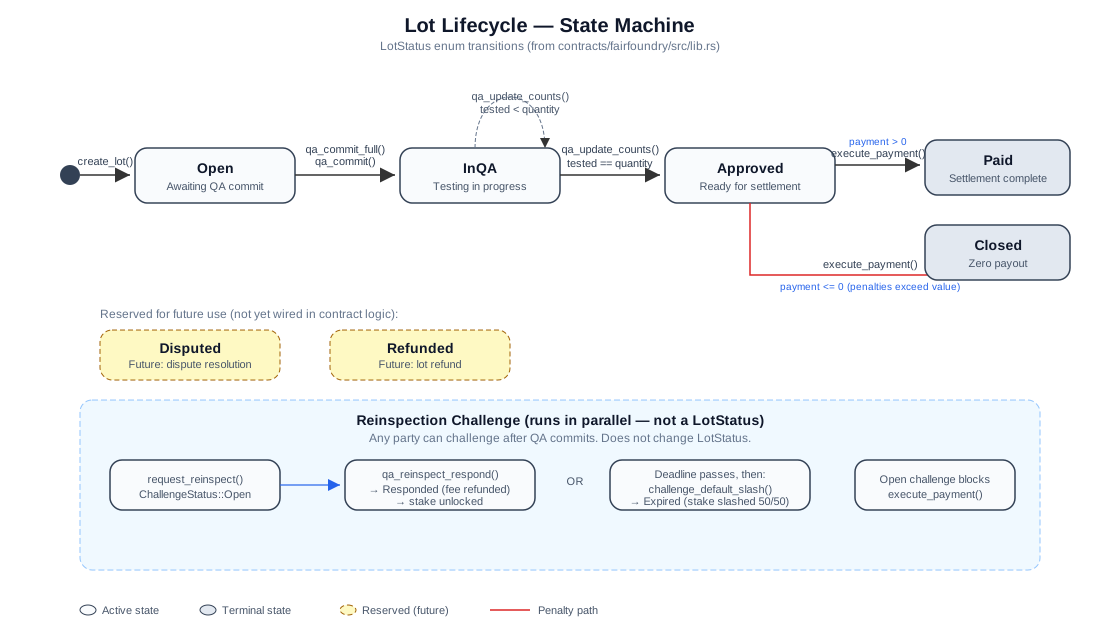
Every manufacturing service progresses through a standardized lifecycle, each stage generating its own verified record.
Order state machine
Settlement timing
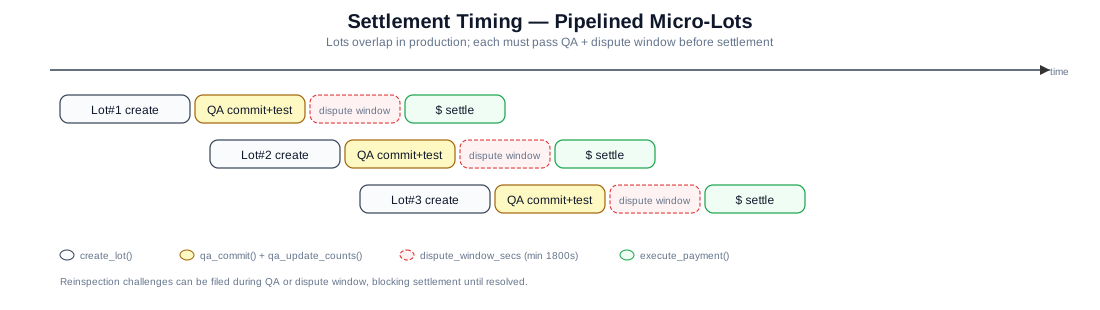
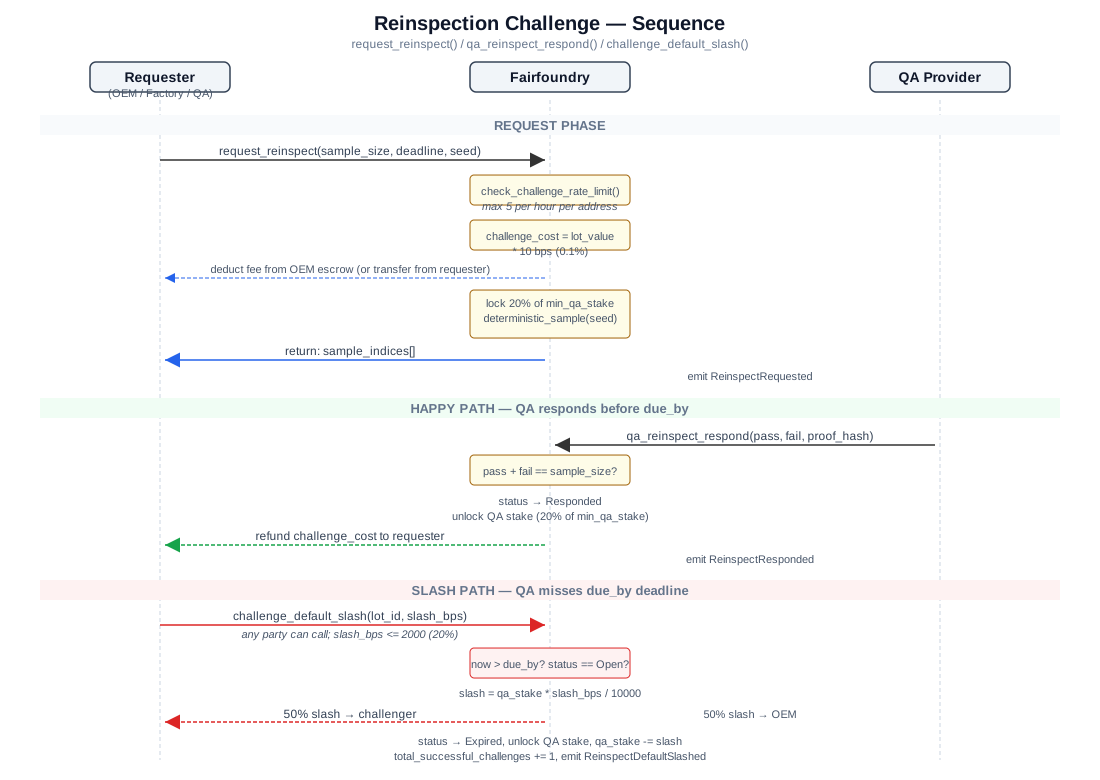
Verified completion triggers payment within hours. Disputes resolve in 96 hours via deterministic re-inspection.
Core capabilities
Five capabilities that power the settlement pipeline.
Escrowed Settlements
OEM deposits funds into a neutral escrow account before work begins. Funds are automatically released upon successful verification. Eliminates payment disputes and factory cash flow risk.
Automated Verification
Fairbuild's verification layer monitors production artifacts 24/7 via direct API hooks to factory test stations. Equipment provenance — firmware hashes and bench IDs — is captured automatically to ensure data integrity.
Quality Certificates
Non-transferable quality certificates issued on validated completion. Each certificate carries permanent metadata: order ID, development stage, verifier identity, and timestamp. Certificates accumulate as a portable factory quality record.
Credit Ledger
Manufacturing partners can accumulate credits across orders instead of direct payment. Credits are redeemable on-demand, reducing cash flow friction for multi-order relationships.
Dispute Resolution & QA Incentives
48-Hour Objection Window
OEM has 48 hours after verification to raise objections. No objection means automatic settlement.
Deterministic Re-Inspection
Random sample selection that neither side controls. Rate-limited. Resolution within 96 hours.
Governance
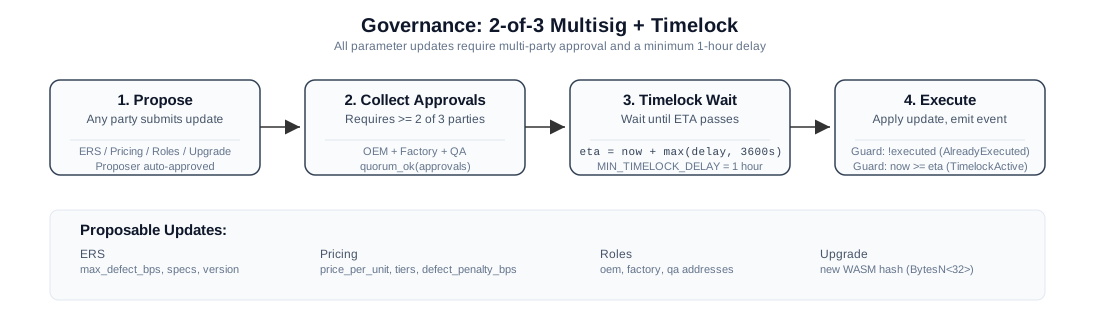
ERS and pricing updates require multi-party approval with minimum 1-hour delay. All state changes are tamper-proof and auditable.
Built with rigor
Settlement happy paths, negatives, auth violations, escrow conservation, SVT monotonicity. Full suite runs in 0.15 seconds.
Settlement engine and quality credential (SVT) system. Open source on Stellar Soroban. Independently auditable.
EVT, DVT, PVT, MP, and Sustaining. Each stage generates its own verified credential, building a permanent quality record.
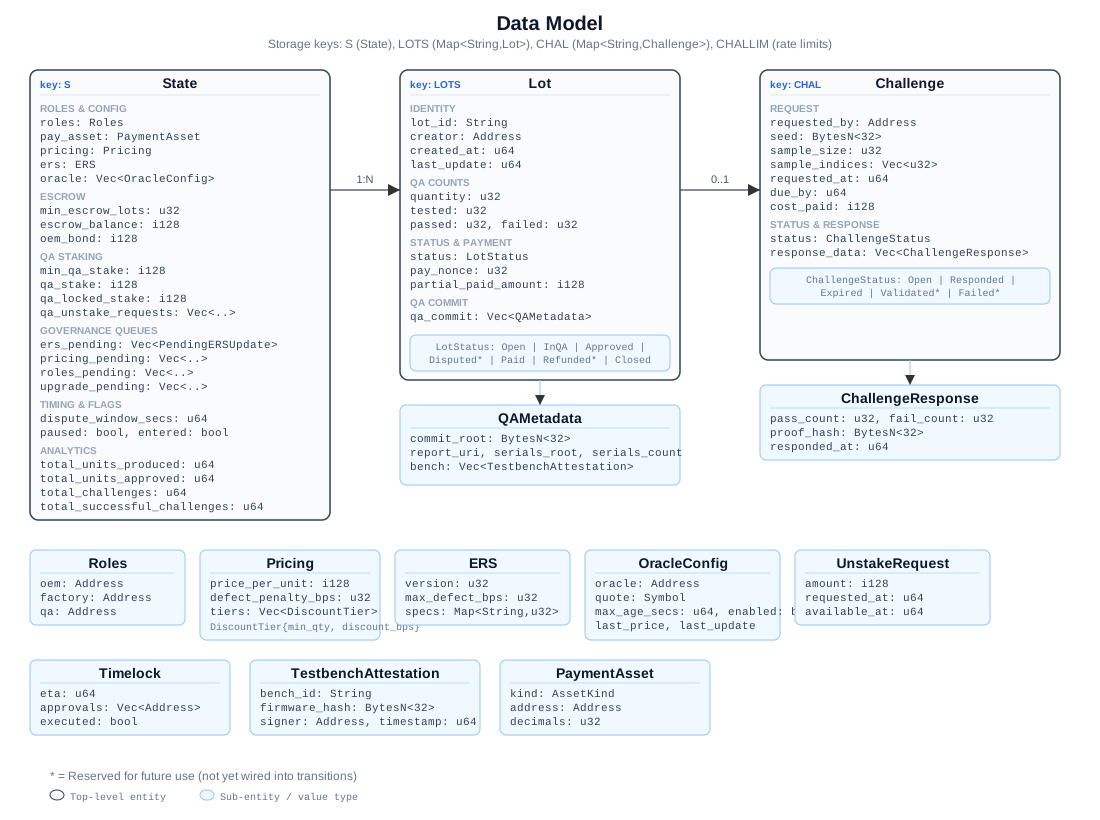
On-chain data model
Service requests, completion attestations, SVT credentials, and the governance timelock — all encoded directly in the contract.
Contract API
Key public functions available on the settlement contract.
Three guard fixes shipped following an internal 3-way review: settle_service now requires factory auth for credit-mode settlement; init rejects re-initialization (AlreadyInitialized); the dispute path rejects late QA responses, zero-bps default-slash calls, and self-slash by the QA. 61 tests pass under the hardened guards. Contract is open source — read the diff on GitHub.
Usage scenarios
How Fairbuild integrates from first conversation to production settlement.
Scenario 1: New camera module program (EVT → MP)
OEM shares ERS document. Fairbuild encodes acceptance criteria (MTF thresholds, SFR specs, cosmetic limits) as verification logic. Factory confirms test data format and upload path.
Fairbuild connects to factory's ATE logs (direct API or OEM database access). Verification logic tested against sample data. Both parties review the settlement terms encoded in the contract.
OEM creates service order and deposits escrow. Factory accepts. EVT build proceeds. On completion, factory uploads test artifacts. Verification runs automatically.
Verification passes. OEM doesn't object within 48 hours. Payment releases to factory. Quality credential issued. Total time from completion to payment: 2 days.
Each development stage creates new service orders with updated acceptance criteria. Same escrow-verify-settle cycle. Factory accumulates quality credentials across stages. OEM can engage different factories per stage.
Scenario 2: Quality dispute during PVT
Automated verification passes — factory's test data meets the encoded acceptance criteria.
OEM's incoming inspection shows different MTF results. They raise an objection within the 48-hour window. Escrow is frozen. Dispute resolution fee deducted from both sides.
Fairbuild engineers review both test data sets remotely. In this case: the factory's test bench was calibrated, but the OEM's reference standard had drifted. Root cause identified without a site visit.
Factory work confirmed valid. Full payment released. OEM updates their reference standard. Acceptance criteria revised for future orders to account for measurement uncertainty budget. Total dispute time: 3 days (not 3 months).
Scenario 3: Multi-factory program
5 service orders, $150K total escrow. All verified and settled within 48 hours each. Factory A earns 5 quality credentials.
Different factory, same contract. OEM creates new service orders with DVT-specific acceptance criteria. Factory B uses different test equipment — Fairbuild reads the data regardless.
Volume production. 50+ micro-settlements per quarter. Factory C accumulates credits and redeems monthly. Quality credentials build a verifiable track record across the full program.
All three factories have auditable quality credentials. OEM compares verified completion records — not slide decks — when planning next year's program. Factory C's 50+ credentials speak louder than a reference call.
Ready to integrate?
The FairFoundry Fabric is open source. Explore the contracts, run the test suite, and reach out to discuss integration.